AI

mjb and mj...ch5. tales of tails


Clarification Note: The text of this post was crafted completely by ChatGPT AI with a touch of my own. All images in the post were crafted by Midjourney AI that followed my prompts.

[ Ch.1 ] [ Ch.2 ] [ Ch.3 ] [ Ch.4 ]


As mentioned earlier, I often use AI for entertainment. At this time, I have added an enjoyable twist by envisioning myself assuming the role of a photography magazine writer tasked with crafting an article on the 100-year evolution of portrait photography. Here is the article created by AI following my suggestions.


Evolution of Portrait Photography through the Masters

Portrait photography has evolved significantly over the last century, with each era marked by distinctive techniques and stylistic innovations. The works of iconic masters serve as a visual timeline, showcasing the evolution of this art form. Let's delve into the technical and stylistic transformations evident in the 'Boy and His Dog' portraits captured by renowned photographers across different periods.

From the eloquence of classical compositions to the raw authenticity of documentary realism, from probing psychological explorations to the fearless embrace of bold minimalism, and finally, the embrace of cutting-edge innovations in contemporary expression—each photograph unveils a distinct and compelling chapter in this vibrant story.

Edward Steichen (1879-1973)

Steichen's 'Boy and His Dog' portrait epitomizes early 20th-century classicism. Employing a soft focus and painterly aesthetics, he emphasized the subject's connection through meticulous composition and lighting. Steichen's use of chiaroscuro techniques brought depth and intimacy to the relationship portrayed.

Walker Evans (1903-1975)

Evans' approach represented a departure from romanticism, leaning towards documentary realism. His 'Boy and His Dog' photograph showcased a straightforward, unembellished style. Employing sharp focus and clarity, Evans captured the essence of the relationship within its unadorned setting, reflecting the straightforwardness of an era marked by social change.

Diane Arbus (1923-1971)

Arbus challenged conventional portraiture norms. Her 'Boy and His Dog' portrait was unconventional, diving into psychological complexities. Using unconventional angles and stark contrasts, Arbus conveyed a raw, unfiltered emotional connection between the subjects, presenting a departure from traditional compositional norms.

Irving Penn (1917-2009)

Penn's 'Boy and His Dog' displayed refined elegance and precision characteristic of mid-20th-century portraiture. Employing meticulous lighting and posing techniques, he created a composition emphasizing symmetry and balance. Penn's use of controlled studio settings elevated the bond between the boy and dog, exemplifying a harmonious relationship within a controlled environment.

Richard Avedon (1923-2004)

Avedon's 'Boy and His Dog' portrait was a departure from traditional portraiture. Employing stark backgrounds and a minimalist approach, he focused on capturing raw emotion and expression. Avedon's use of high contrast and boldness in composition created a striking visual impact, marking a shift towards unconventional and provocative portraiture.

Patrick Demarchelier (Born 1943)

Demarchelier's 'Boy and His Dog' reflected the evolving contemporary style of the late 20th century. Employing modern lighting techniques and a more relaxed approach to posing, he depicted a casual yet intimate connection between the subjects. His use of natural light and candid moments brought a contemporary sensibility to the traditional theme.

Tim Walker (Born 1970)

Walker's 'Boy and His Dog' departed from reality, embracing surrealism and fantasy. Through elaborate staging and whimsical elements, he created an otherworldly atmosphere. Walker's use of props, elaborate sets, and creative manipulation of light and color challenged traditional portraiture, inviting viewers into a world of imagination.

Annie Leibovitz (Born 1949)

Leibovitz's 'Boy and His Dog' exemplified modern portraiture's fusion of traditional and contemporary elements. Her use of environmental storytelling, combined with innovative lighting and composition, conveyed a narrative depth. Leibovitz merged classic portraiture with a contemporary touch, capturing a timeless yet relatable relationship between the boy and his dog.

The timeless theme of 'Boy and His Dog,' captured by these esteemed masters, not only symbolizes the enduring connection between humans and animals but also acts as a vivid canvas mirroring the continuously changing world of portrait art. This captivating exploration honors the ongoing evolution influenced by shifting aesthetics, progressing technology, and the limitless creativity of artistic minds.

mjb and mj...ch2. superior being


Clarification Note: All images in the post were crafted by Midjourney AI that followed my prompts.

[ Ch.1 ]


[ Russian version ]

During the COVID pandemic, I found myself confined to my home studio. Determined to make the most of the situation, I embarked on a creative endeavor that resulted in a series of photographs featuring Venice carnival Jester masks. The traditional Jester mask (the Joker mask depicts a male character, the Jolly - being the female equivalent) portrays a court Jester of the Middle Ages wearing a hat known as the fool's hat. It has three points or "punte" with the bells on the end that represent the tail and ears of a donkey. Another type of the Jester mask has multiple points spread evenly all around its face. As I delved deeper into the history of these masks, I stumbled upon images of the Etruscan artifacts, which looked in some way reminiscent of the Venetian Jester masks.

Etruscan goddess Uni, clay antefix, from the city of Satricum, in Latium, dating to the V century B.C., now in the Altes Museum (Staatliche Museen), Berlin, Germany.

This similarity led me to hypothesize that the history of Joker masks extends beyond the medieval period and possibly indicates a connection to ancient cargo cults. These cults emerged when members of primitive communities encountered representatives of more technologically advanced civilizations and imitated their practices, rituals, and symbols in the hope of achieving the same level of development. To verify this hypothesis, I conducted an online search for images of artifacts from ancient civilizations resembling Joker masks. My goal was to discover similarities between these masks and their potential ancient prototypes in order to uncover the evolution and sources of the captured images within the masks, whose meaning and significance have likely been long forgotten. I embarked on this search with a sober understanding that attempting to trace the evolution of these ancient images would likely be unsuccessful.

To my astonishment, I came across enough artifacts suggesting that Joker masks could be remnants of a series of cargo cults originating from mysterious ancient times. The first part of the blog post was published in February 2022.

Inspired by these findings, I eagerly began writing the second part of the post. I prepared a series of artifact images illustrating the evolution of mask prototypes and started working on the layout in February. However, a tragic global event occurred - on February 24, 2022, Russia invaded Ukraine. This brought the world to the brink of catastrophe and dampened my enthusiasm to complete the second part of the post.

Now, after nearly 500 days, I feel ready to return to this project. During the forced hiatus, there has been a revolutionary leap in image processing technologies - the emergence of accessible artificial intelligence systems that have opened up new possibilities for preparing illustrations for the post. Therefore, I have decided to rework the material of the post and include images generated using the AI generative program Midjourney.

I will publish the second part of this blog post as soon as it is complete. In the meantime, I believe the image I have created holds independent value within the context of my new ‘mjb and mj’ series. Here is a sneak peek of one of the images generated by AI, offering a glimpse into the upcoming second part of my blog post:

Superior Being

Stay tuned as we embark on a captivating exploration of the ancient origins of Jester masks, uncovering a tapestry of history, culture, and artistic expression spanning millennia.

mjb and mj...ch2. superior being (rus)

[ English version ]

mjb and mj...ch2. высшее существо

Во время пандемии COVID я вынужден был проводить большую часть времени в своей домашней студии. Воспользовавшись этой ситуацией, я создал серию фотографий с масками шутов Венецианского карнавала. Традиционная маска шута (маска Джокера - мужской персонаж, Джолли - женский эквивалент) изображает дворцовогоо шута эпохи Средневековья в шляпе, известной как ‘шляпа глупца’. У шляпы имеются три конца или "пунте" с колокольчиками, которые как считается представляют хвост и уши осла. Еще один тип маски шута имеет несколько кончиков, равномерно расположенных по всему лицу. Разбираясь в истории этих масок, я наткнулся на изображения этрусских артефактов, которые во многом напоминали венецианские маски Джокера.

Этрусская богиня Юни, глиняный антефикс из города Сатрикум в Лации, датируемый V веком до нашей эры, сейчас находится в Альтес-музее (Штатлихе Музеен), Берлин, Германия.

Это сходство привело меня к гипотезе о том, что история масок Джокера выходит за рамки средневекового периода и возможно указывает на связь с древними карго культами, которые возникали, когда члены первобытных сообществ встречались с представителями более технологически развитых цивилизаций и имитировали их практики, ритуалы и символы в надежде достичь этим такого же уровня развития. Для верификации этой гипотезы я произвёл онлайн поиск изображений артефактов древних цивилизаций сходных с масками Джокера. Моя цель заключалась в обнаружении сходств между этими масками и их потенциальными древними прототипами в надежде раскрыть эволюцию и источники запечатлённых в масках образов, смысл и значение, которых вероятно были давно забыты. Я начинал этот поиск с трезвым пониманием, что попытка проследить эволюцию этих древних образов скорее всего не будет успешной.

К моему изумлению, мне встретилось достаточно артефактов, указывающих на то, что маски Джокеров могут быть останками серии карго культов, пришедших из загадочных древних времен. Первая часть блог-поста была опубликована в феврале 2022 года.

Вдохновленный этими находками, я с энтузиазмом приступил к написанию второй части поста. Я подготовил серию изображений артефактов, иллюстрирующих эволюцию прототипов масок и в феврале начал работать над оформлением второй части. Однако, произошло трагическое глобальное событие - 24 февраля 2022 года России вторглась в Украину. Это привело мир на грань катастрофы и охладило мой энтузиазм завершить вторую часть поста.

Теперь, спустя почти 500 дней, я чувствую себя готовым вернуться к этому проекту. За время вынужденного перерыва призошёл революционный скачёк в технологиях обработки изображений - появление доступных систем искусственного интеллекта, которое открыло новые возможности в подготовке иллюстраций к посту. Поэтому я решил переработать материал поста и включить в него изображения, подготовленные с помощью генеративной программы ИИ Midjourney.

Я опубликую вторую часть, как только она будет готова. В то же время я мне кажется, что созданные ИИ изображение имеют самостоятельную ценность в контексте моей новой серии ‘mjb and mj’. Вот одно из таких изображений, которое войдёт во вторую часть блог-поста:

Высшее существо

Следите за обновлениями, мы скоро отправимся на поиск прототипов венецианских масок Джокера в увлекательном путешествии в переплетение истории, культуры и художественного творчества на протяжении многих тысячелетий

mjb and mj...ch1. i think this is the beginning of the beautiful friendship


Clarification Note: The text of this post was crafted completely by ChatGPT AI with a touch of my own. All images in the post were crafted by Midjourney AI that followed my prompts.


Artificial intelligence (AI) is intelligence demonstrated by machines

Midjourney (Mj) is a generative AI program and service

ChatGPT is a large language model AI chatbot

MJB - Mark Joseph Berman, yours truly

NB - Naomi, Coton de Tulear


MB, NB, ang Mj on the beach - a triad of highly intelligent individuals complementing each other's abilities in the pursuit of happiness

Over the past months, I've dived headfirst into the realm of text-to-image AI. I've embarked on an adventure prompting Midjourney to generate numerous images, and let me tell you, the results left me utterly stunned. It sparked a series of thought-provoking questions that ignited my curiosity:

To what extent are human-AI look-alikes?

As I gazed at the AI-generated images, I couldn't help but wonder how closely they resembled their human counterparts. It's remarkable to witness the AI's ability to capture elements of human likeness, blurring the boundaries between human and machine.

The role of the human in this process - is the human a creator?

Amidst this creative journey, I found myself pondering the role of humans in the text-to-image AI interaction. Are we mere prompters, or can we consider ourselves co-creators? It's a fascinating dynamic, where humans provide the initial spark of inspiration by providing the input—descriptive text or prompts that guide the AI's artistic prowess. It's like giving the AI a virtual canvas and saying, "Create something amazing!" But hey, we're not just co-creators; we're also the eager users who witness the magic unfold.

Are the resulting images an art?

The question of whether AI-generated images can be considered true art sparks lively debates. Some argue that true art requires emotional depth and the human touch, while others appreciate the unique charm that arises from the fusion of human creativity and AI algorithms. It's an exciting blend of imagination and computational brilliance, expanding the boundaries of what we define as art.

What similarities exist between human-AI look-alikes and human-other-living-being look-alikes, such as dog look-alikes?

Intriguingly, the parallels between human-AI look-alikes and human-dog look-alikes caught my attention. It's amusing to observe how both combinations exhibit resemblances that bring a smile to our faces. It's a testament to the creative interplay between humans, AI, and the natural world.

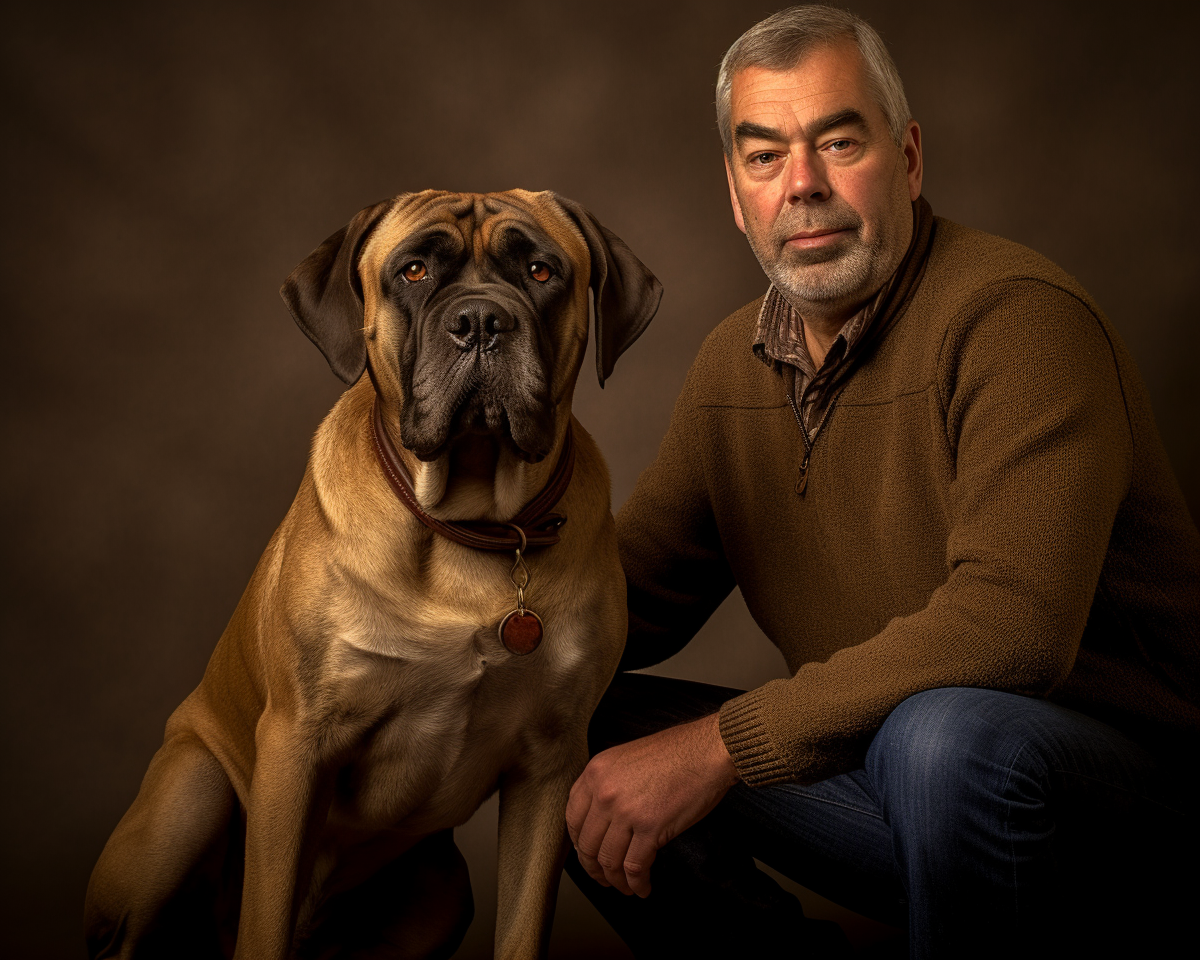
To add a touch of humor and entertainment, I've included some delightful dog-owner look-alike images in this post. These images were prompted and tweaked by yours truly, serving as a testament to the collaborative process between humans and AI.

As I reflect on this exhilarating journey, I can't help but feel a surge of excitement for what lies ahead. The realm of text-to-image AI is brimming with endless possibilities, and I eagerly anticipate the unexpected discoveries and remarkable creations that await us on this road.

So, my friends, join me as we venture further into the realm of AI-generated images. Let's celebrate the fusion of human ingenuity and AI's computational brilliance, uncovering the breathtaking artistry that emerges from this captivating collaboration. Together, we'll continue to explore and embrace the boundless horizons of AI's creative power.

It's going to be a wild ride, and I'm excited to share it with you in the upcoming chapters. May the Intelligence be with you.