recent

Nerry Berman… a memoir made public

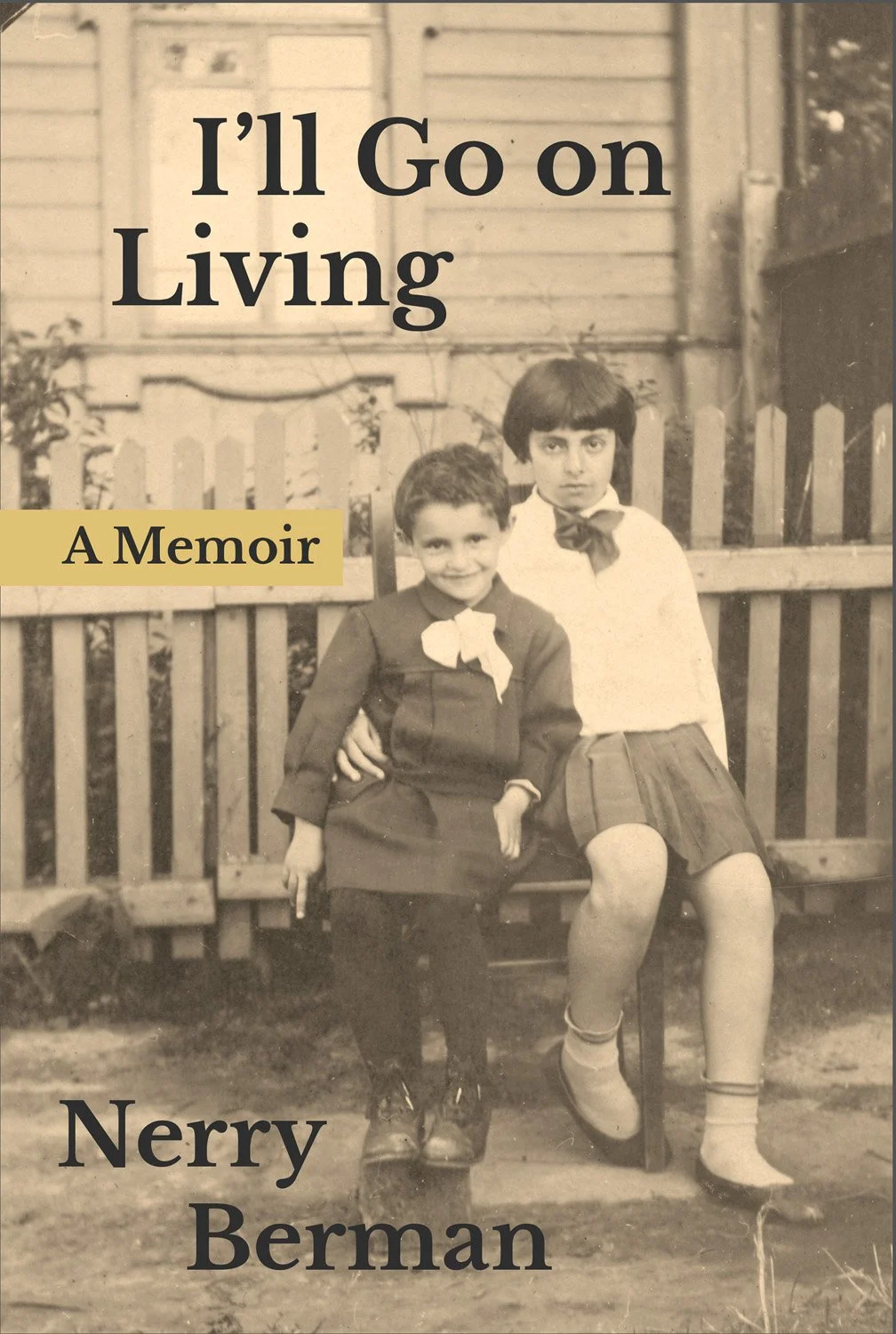
The memoir I’ll Go On Living, the result of many years of reflection and work by my mother, Nerry Berman, has been made public. The book was edited by Nerry Berman’s direct descendants: Benjamin Antonetti, great-grandson; Elena Antonetti, granddaughter; Mark Berman, son; Rina Berman, daughter.

Spanning the Russian Empire, the USSR, World Wars I and II, and the postwar years, it traces five generations of two Jewish families in Ukraine and Russia. She recounts the life paths that connected her with Joseph Berman, a young soldier worn down by four years on the Eastern Front. More than a personal memoir, the work reflects Nerry’s lifelong and genuine interest in gathering and preserving fragments of family lives; the family tree behind the narrative brings together over 200 individuals across generations. Rooted in personal experience, the narrative also stands as a historical record of survival, resistance, and the choice to go on living.

The memoir is available on Amazon in hardcover. A free downloadable PDF edition (125 MB) is also available.

Copyright © 2025 by the Estate of Nerry Berman

Language ‏ : ‎ English

Print length ‏ : ‎ 251 pages

Illustrations: Photographs from the family archives

ISBN: 979-8-293-22213-1

autumn at core creek…geese, deer, and a chance of humans...lake luxembourg

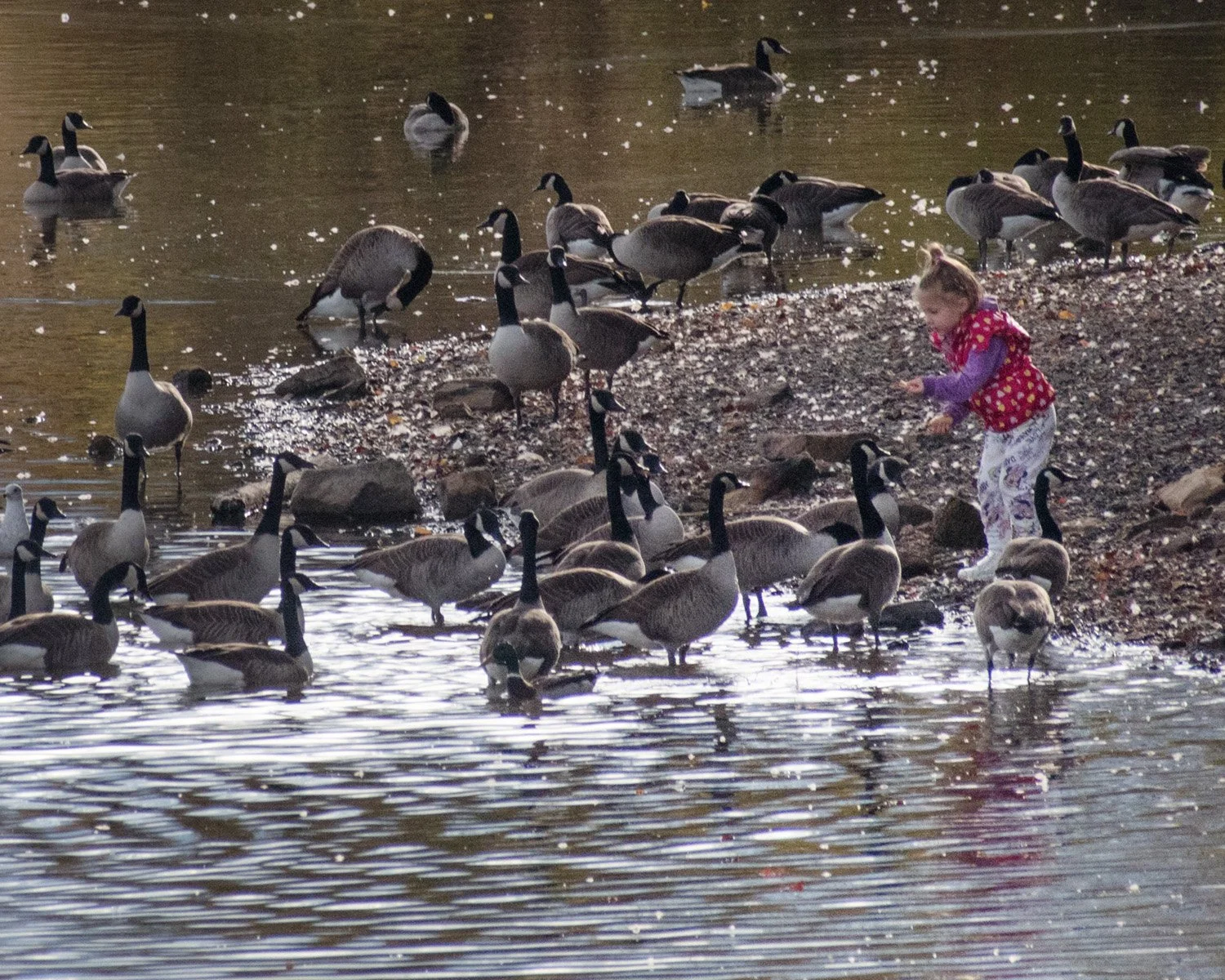
The thousands of geese are filling three of Nature’s elements this time of year: the Air, the Waters of Lake Luxembourg, and the Earth of the surrounding fields. The deer, thankfully, stick to the fields only. The weekend crowds of humans have faded; now I just sightsee the odd one here and there.

It’s the best stretch of the year: colorful, calm, pleasant, and quiet. Great light, great air, and nobody bothering anybody.

The views are so good it’s almost unfair. Choosing which photos to share was the real challenge. Your screens won’t show every tiny detail in the images, so I added a few close-up crops to give you a sense of what you’re missing.

Close-up crop of a tiny middle section of the panorama above

Close-up crop of a middle section of the image above

joyful day revisited...Simchat Torah 2009

The year is 2009. Lucy and I joined our daughter’s family for Simchat Torah at Congregation Beth Israel of West Hartford, CT. It was a beautiful celebration, full of genuine warmth. Rabbi Stephen Fuchs led the ceremony, and I walked around with my camera capturing as much of it as I could. I took a lot of photographs that day. One picture I kept coming back to became my favorite, and I printed several copies, among them one for Rabbi Fuchs and another for the Temple. Then life moved on, and for some reason I never published the images or even looked at them again.

Not long ago, I received a very kind message from Rabbi Fuchs telling me how much he and his wife still treasure that photograph. Hearing that encouraged me to revisit those old files. So I dusted off the archive and decided it was time to finally share the joy of that day.

Here are a few images from the 2009 celebration.

Here it is, the photo that became my favorite:

from beast to maiden...clearing Medusa's name


Clarification Note: The text of this post was prepared using ChatGPT and Claude AI . The images in the post were crafted by Midjourney AI that followed my prompts.


In Greek mythology, the Titans were ancient deities who ruled in peace and harmony before the Olympian gods. After the Titans lost to the Olympians, long before the time of Ancient Greece, the Titans' images were demonized. This demonization later became embedded in the myths of Ancient Greece and was eventually passed down to Western culture as it was. Medusa, the most beautiful maiden of Titan origin, did not escape this fate. Today, her name is commonly associated with a terrifying monster whose murder was considered a blessing. To restore justice let us explore the original version of Medusa's myth.

Various versions of the restored myth of Medusa have been proposed. I lean towards the one inspired by Golosovker's "Tales of the Titans" and the lectures from the Forgotten Ruins channel, particularly the lecture "The Gorgon Medusa - The End of the Legend." I highly recommend both sources to readers interested in exploring the subject further. Neither of them is available in English, but they can be easily translated using modern AI tools. The next best option for English-speaking readers is the excellent novel by William Tenn, “Medusa Was a Lady” (click the link to read it).

So, let's begin our journey from Beast to Maiden.

Medusa: Beauty Behind the Myth

Digest to ‘The Tale of the Titaness Gorgon Medusa'

Children of Gaia (Earth) and Uranus (Sky) — the Titans Phorcys and Ceto — had six daughters (The Phorcydes). Three of them — Pemphredo, Enyo, and Dino — were called the Graeae and were known for their silver hair and beauty. The other three — Stheno, Euryale, and Medusa — were the beautiful Gorgons with golden wings.

( Undoubtedly, the names "Graeae"-"Old Women" and "Gorgon"-"Terrifying" were given to the Phorcydes by the Olympian gods following the Phorcydes defeat. This was done to erase any memory of their once-beautiful nature.)

After the fall of the Titans and the rise of the Olympian gods, the Phorcydes refused to bow to the new rulers. Athena-Pallas, daughter of Zeus and the Titan Metis, envied Medusa's beauty and strength, especially her hair. Poseidon, urged on by Athena, chased Medusa and eventually raped her in a temple where she was hiding. Not satisfied with this, Athena, in her anger, transformed Medusa from a beautiful girl into a monstrous figure with snake hair and a gaze that turned everything to stone.

(By the way, the story of Athena's nickname, Pallas, perfectly illustrates her wild sadistic nature. After she defeated the Giant Pallas, Athena skinned him alive to make her breastplate. She also added the Giant's name to her own as a trophy, which is why she's often referred to as “Pallas” or “Pallas Athena.” She later affixed the head of the Gorgon Medusa to it. The other version is that the breastplate was made from the hide of her "milk grandmother", the goat Amalthea, who nursed her father Zeus as an infant. It's up to you to decide which version sounds less shocking.)

Medusa became an outcast and had to hide with her sisters at the edge of the world, guarded by the Graeae. Once a year, the Gorgons would fly out into the world, and during that time Medusa realized her gaze could turn anything to stone.

Athena inspired Perseus, the son of Danaë and Zeus, to want to cut off Medusa's head, and Hermes helped him find the way. Perseus got magical items from the nymphs: a bag, an adamantine sickle, and Hades' cap of invisibility. Athena also gave Perseus a mirror-like shield so he could see Medusa without looking directly at her.

Using trickery, Perseus forced the Graeae to show him the way to the Gorgons. When he arrived, he cut off Medusa's head. From Medusa's body came the winged horse Pegasus and the titan Chrysaor. Medusa's sisters woke up and tried to chase Perseus, but they couldn't catch him. By the gods' command, Perseus returned all the magical items, including Medusa's head, which Athena placed on her breastplate.

Athena also collected Medusa's blood, which could either save or kill people, and gave it to the healer Asclepius. Asclepius used it to bring the dead back to life, breaking the law of Ananke, the inevitability of fate. This disruption of the natural order of the cosmos angered Zeus and he struck Asclepius down with a lightning bolt to remind everyone of the inevitability of death.

My drawing of Perseus from around 1954, which I found many years later in my mom’s archive

Homage to Medusa

Since many people will see the images on small screens, which might not highlight the images' nuances, here are some enlarged fragments of "Homage to Medusa" to enhance the viewers' experience.

Medusa's Cenotaph

Mourning Giantess

core creek park and lake...50 shades of green

After multiple rains, Core Creek Park is showing off. The leaves look freshly rinsed - more spring than summer. Shades of green are everywhere. Every path is lined with color - soft, deep, vibrant, layered, and alive.

The regulars are back: dog walkers, geese, deers - everyone enjoying the calm.

mjb and mj...ch8. Alfons Mucha goes mobile


Clarification Note: The images in the post was crafted in cooperation with Midjourney AI, which followed my prompts.


I love the elegance of Alfons Mucha’s work — the flowing lines, ornate details, and those timeless muses that seem to float right off the canvas. Lately, I found myself browsing through that style with a small postmodern, anachronistic twist — just a hint of absurdity.

Usually, when artists play with anachronism, they go for the classic mix: characters from the past wearing slightly-too-modern outfits — like medieval Hamlet characters dressed for the Renaissance — but still carrying props like swords to anchor the scene in its intended era.

So I thought… what if we flipped that around?

What if we kept all the vintage charm — those gorgeous Victorian gowns, the elegant floral frames — but dropped in a bit of 21st-century tech? You know, earbuds to complement the earrings. iPhones instead of lace fans. A muse checking her messages instead of admiring her reflection.

With that idea in mind, I let AI run wild and generate a batch of Mucha-inspired “paintings.” From dozens of results, I’ve picked a few favorites to share the joy (and the gentle absurdity) with you.

Here’s my top pick from the batch:

And a few more for good measure.

Enjoy the scroll — no strolling required.

lost in time...winter on newtown’s last farm

We settled in Newtown Township in 1996, right on the edge of Newtown Borough - a small town of about 2,000 people. Back then, our backyard overlooked farmland, with open fields stretching in all directions.

Fast forward to the 2020s, and the landscape has completely transformed. The farms that once surrounded us have disappeared, replaced by single-family homes, condominiums, and shopping centers. Though the area still retains its suburban charm with plenty of green spaces and parks, the only farm that remains nearby is Shady Brook Farm.

Shady Brook Farm, in particular, has seen rapid development around it. With condominiums and commercial buildings now encroaching on its borders, its future feels uncertain. Sadly, these might be its final years. A landscape once timeless, now fading into memory.

I drive by its fields daily, taking in the ever-changing scenery - vast open spaces, an unobstructed sky filled with dramatic or cheerful clouds, and the shifting colors of the seasons. This winter has been unusually warm, with little snow. Here’s a glimpse of how it looks nowadays - starting with bare fields,

then a light dusting of snow as the snowfall begins to accumulate,

and finally, a snow-covered field

lake luxembourg...shinrin-yoku

Lake Luxembourg is my go-to spot for practicing shinrin-yoku - or forest bathing. This Japanese relaxation practice is all about slowing down, being calm among the trees, and soaking in the beauty of nature. It’s as simple as using your senses to observe the little details around you.

When I’m there, I sit or walk quietly with a camera, staying mindful of my surroundings. The trick is to leave daily worries behind and focus on the moment—like watching forest creatures go about their day.

Nature’s colors and sounds are incredibly soothing. While some people find green and blue the most relaxing, my favorite palette leans toward muted yellows, earthy browns and reds. On my last visit, the scene was perfect: withered grass glades, bare trees, and a frozen lake under the soft light of a cloudy winter sky.

There wasn’t any snow, and the place was completely deserted - except for a lone gray heron. These birds are usually pretty shy, but the frozen lake and quiet surroundings seemed to make it feel at ease, standing out in the open.

It was a peaceful moment, just me and the heron, soaking up the tranquility of the season.

they are coming...brushed in tradition, framed in code...atelier Nexus


Clarification Note: The images in the post was crafted in cooperation with Midjourney AI, which followed my prompts


It’s already a reality.

AI-powered robots are reshaping the art world. On November 7, a 7.5-foot portrait of Alan Turing created by Ai-Da, the world’s first ultra-realistic robot artist, sold for $1,084,800 at Sotheby’s Digital Art Sale, far surpassing the pre-sale estimate of $180,000.

I am not sure if AI artist studios will proliferate in the future as photography studios did during the boom of the early 20th century. Still, the idea of breathing new life into classic image-making in the Silicon Age is intriguing.

What if traditional artistry and cutting-edge technology came together in a harmonious blend? In that spirit, here’s a glimpse into the imagined AI art studio 'Atelier Nexus,' a place where timeless techniques and futuristic innovation coexist.

hey pumpkins..happy halloween


Clarification Note: The image in the post was crafted in cooperation with Midjourney AI, which followed my prompts.


A brave new world - a post-AI Halloween celebration. A dead serious chill - the day of the living.


Postscript:

To my surprise, not everyone got the humor of this post. So here’s an explanation by ChatGPT:

'The humor here comes from flipping Halloween traditions and adding a futuristic twist. Halloween usually celebrates the "Day of the Dead," but in this "post-AI" world, skeletons are now the ones chilling out and watching humans, dressed as dolls like Barbie and Ken, put on a show. This “day of the living” implies that the roles have been reversed—it's the undead who are now relaxed spectators of humanity, which is cleverly ironic.

Also, "A dead serious chill" plays with the double meaning of "dead" and "chill," implying both relaxation and a spooky vibe, fitting for a Halloween scene.'

mjb and mj...ch6. 2024...box that is always with you/ границы, которые всегда с тобой


Комментарий: Все изображения в посте были созданы в ИИ Midjourney по моим промптам. Перевод на русский сделан с помощью ChatGPT и Claude.


Краткое содержание:

2024 год. Всё идёт не так как надо, и мы не знаем как это исправить. "Мыслить нестандартно" [Thinking out of the box] звучит хорошо, но обычно это просто создает другие ограничения. Использование интуиции и невербального подхода может помочь, но трудно передать результаты другим, потому что слов часто не хватает. Мы блуждаем в потёмках, и вот моя визуальная интерпретация этого положения.


"Допустим вы пробили стену головой.

Что вы будете делать в соседней камере?"

Станислав Ежи Лец


2024 год. Все идет в неправильном направлении, и никто не знает, что с этим делать.

Нам нужны лидеры, которые могут мыслить нестандартно, как герои во всех этих великих книгах и фильмах. "Мышление вне рамок" звучит как отличная идея. Оно должно спасти мир, верно?

Но чем больше я об этом думаю, тем больше понимаю, что выход за пределы одних рамок просто помещает нас в другие рамки. И почему:

Если мы определяем "мышление" как умственный процесс, включающий язык и логику, то эти вещи создают своего рода "рамки" для наших мыслей. Таким образом, "мышление вне рамок" означает выход за пределы обычных известных нам идей, но это все еще просто мышление в рамках другого набора идей, или других рамок.

Как насчет "мышления вне КАКИХ-ЛИБО рамок"? Это означает мышление за пределами любого набора установленных идей, а не просто замену одного набора на другой. Проблема в том, что, как только мы начинаем мыслить, мы создаем структуры или "рамки" для организации наших мыслей. Поэтому мышление полностью вне каких-либо рамок невозможно, потому что даже попытка сделать это создает новые рамки. Это ведет в никуда.

Есть способ выйти из ловушки "мыслительных рамок", который не очень популярен в нашем ориентированном на науку мире: обращение к интуиции и другим нелогичным способам познания. Хотя мы обычно считаем логическое мышление лучшим видом понимания мира, это упускает из виду другие способы понимания мира. Интуиция, например, позволяет нам быстро и часто подсознательно обрабатывать информацию, приводя к прозрениям, которые может упустить логика. Невербальное мышление, такое как визуальное или пространственное рассуждение, также играет большую роль в решении проблем и творчестве.

Загвоздка в том, что передать эти интуитивные и невербальные прозрения трудно. Они не следуют четким, структурированным путям логических рассуждений. Когда мы пытаемся объяснить эти прозрения, мы должны облечь их в слова, что может быть ограничивающим и может не передать полную суть нашего понимания.

Таким образом, мы сталкиваемся с парадоксом: хотя интуиция и невербальное мышление необходимы для более глубокого понимания мира, эффективное обмен этими прозрениями требует слов. А слова могут лишь приблизительно перевести изначальное прозрение, теряя по пути некоторые нюансы. Это означает, что хотя мы можем лично оценить эти способы познания, обмен ими с другими часто является сложной и несовершенной задачей.

Хотя слияние всех этих способов понимания может произойти в будущем, если наша цивилизация выживет (что-то вроде того, что Герман Гессе представлял в своей книге [гл.4]), это не то, что мы можем использовать прямо сейчас. Сегодня мы находимся на перепутье без четкого видения пути вперед.

Эти мысли тревожили меня в последнее время. Вот результат почти года моих попыток выразить эти ощущения визуально:
границы, которые всегда с тобой


О создании изображений с помощью ИИ:

Создание этого изображения заняло у меня почти год. Это хороший пример того, как на самом деле работает процесс создания изображений с помощью ИИ. Несмотря на общее заблуждение, что нужно просто написать текстовый запрос, нажать кнопку, и вуаля, появляется отличный результат — на самом деле это гораздо сложнее.

Это правда, что можно отправить ИИ промпт с несколькими словами, многими словами или даже пустой промпт и получить визуальный ответ в течение нескольких минут. Ответ может быть отличным изображением или мусором, но почти никогда тем, что задумал автор промпта. Чтобы получить более предсказуемый результат, автор промпта должен настраивать и корректировать текст запроса и параметры, иногда через сотни проб и ошибок без гарантированного успеха. В зависимости от настойчивости и терпения автора промпта , процесс может занять от часов до недель или даже месяцев. В конечном итоге автор промпта просто останавливается из-за истощения и удовлетворяется результатом, независимо от того, какой результат был достигнут.

Одним непредвиденным аспектом создания изображений с помощью ИИ является то, как долго длится процесс и как модель развивается в процессе. Создание изображений с помощью ИИ - быстро развивающаяся область. Например, я использую модель ИИ Midjourney, и за год, который потребовался для создания этого изображения, я начиная с версии 4, последовательно переключался на версии 5, 5.0, 5.1, 5.2 и 6. Каждая версия имела значительно улучшенные возможности, что заставляло меня менять направления и идеи в моих попытках. Конечно, этого бы не произошло, если бы я завершил изображение за дни или недели.

Другой важный аспект текущего состояния генерации изображений с помощью ИИ заключается в том, что, несмотря на взрывной рост, эта область все еще находится в зачаточном состоянии (Midjourney существует около 2 лет). Он может генерировать отличные изображения, но чем сложнее изображение, тем менее совершенен и предсказуем результат. Поэтому, чтобы создать сложное изображение, подобное приведенному выше, нужно разбить конечную идею на части, создать их отдельно и постепенно соединять вместе. Это чрезвычайно утомительный процесс, требующий множества проб и ошибок сам по себе.

Чтобы проиллюстрировать процесс, вот изображение, которое содержит крошечную часть из сотен попыток, которые я сделал за год:

выходцы за рамки

Первые два ряда - это примеры изображений, сгенерированных ИИ до начала процесса отбора и настройки. Когда наконец я получил изображение, которое счёл основой для конечного результата (второе слева в нижнем ряду), я начал работать вокруг него. Я создал дополнительные части финального изображения отдельно (конечно, в процессе многочисленных безуспешных попыток), соединил их вместе и в конечном итоге сделал все тональные и цветовые коррекции и изменение размера в Photoshop’e.

И в завершение, вопрос "Кто является творцом изображения, созданного с помощью ИИ — автор промпта, ИИ, художники, чьи работы были загружены в базу данных ИИ, или все они?" не имеет простого ответа. Вам судить. Я уверен только в том, что это изображение уникально, и никто, включая меня самого, не может воспроизвести его, даже тщательно повторяя каждый шаг его создания. Добро пожаловать в прекрасный новый мир!

mjb and mj...ch6. 2024...box that is always with you


Clarification Note: All images in the post were crafted in cooperation with Midjourney AI, which followed my prompts.


Quick Summary for Those Who Prefer a Short Read:

2024. Things are going wrong, and we’re unsure how to fix them. ‘Thinking outside the box’ sounds good, but it usually just creates another box. Using intuition and non-logical thinking might help, but it’s hard to convey the results to others because words often fall short. We’re at a confusing crossroads, and here’s my visual take on this less-than-optimistic observation


'Suppose you succeed in breaking the wall with your head.

And what, then, will you do in the next cell?'

 Stanislaw Jerzy Lec

2024. Everything is going in the wrong direction and nobody knows what to do with it.

We need leaders who can think outside the box, just like the heroes in all those great books and movies. ‘Thinking outside the box’ sounds like a great idea. It should save the world, right?

But the more I thought about it, the more I realized that stepping outside one box just puts us into another box. Here's why:

If we define ‘thinking’ as the mental process that involves language and logic, then those things create a sort of ‘box’ for our thoughts. So, ‘thinking outside the box’ means going beyond the usual ideas we know, but it’s still just thinking within another set of ideas, or another box.

What about ‘thinking outside A box’? That means thinking beyond any set of established ideas, not just swapping one set for another. But here's the tricky part: as soon as we start thinking, we create structures or ‘boxes’ to organize our thoughts. So, the idea of thinking completely outside any box is kind of impossible because even trying to do that makes a new box. It leads nowhere.

Well, there is a way out of the ‘thinking box’ trap that’s not very popular in our science-focused world: tapping into intuition and other non-logical ways of knowing. While we usually think of logical thinking as the best kind, this overlooks other ways of understanding the world. Intuition, for example, lets us process information quickly and often subconsciously, leading to insights that logic might miss. Non-verbal thinking, like visual or spatial reasoning, also plays a big part in solving problems and being creative.

But here's the catch: communicating these intuitive and non-verbal insights is tough. They don’t follow the clear, structured paths of logical reasoning. When we try to explain these insights, we have to put them into words, which can be limiting and might not capture the full essence of our understanding.

So, we have a paradox: while intuition and non-verbal thinking are essential for a deeper understanding of the world, sharing these insights effectively requires words. And words can only roughly translate the original insight, losing some of the nuance along the way. This means that while we can personally appreciate these ways of knowing, sharing them with others is often a complex and imperfect task.

Although blending all these ways of thinking might happen in the future if our civilization survives (kind of like what Hermann Hesse imagined in his book [Ch.4]), it’s not something we can use right now. Today, we’re at a crossroads without a clear view of the path ahead.

These thoughts have been bugging me for a while. After almost a year of navigating through various attempts with mixed results, here’s my visual take on this less-than-optimistic observation.

The Box That Is Always With You


Glimpses into AI Image Creation:

The crafting of this image took me the longest time so far — almost a year of on-and-off attempts. It's a good example of how the real process of AI image creation works. Despite the general misconception that one just needs to write a verbal prompt, click a button, and voilà, a great result appears — there is much more to it.

It is true that one can submit to AI a prompt with a few words, many words, or even a blank prompt, and receive a visual response within minutes. The response could be a great image or garbage, but almost never what the prompter had in mind. To get a more predictable result, a prompter has to do a lot of tweaking and adjusting of the prompt's text and parameters, sometimes through hundreds of tries and errors without guaranteed success. Depending on the prompter's persistence and patience, the process can take from hours to weeks or even months. Eventually, the prompter just stops because of exhaution and accepts the result no matter what result was achieved.

One unforeseen aspect of this endeavor is how long the process takes and how the model evolves along the way. The AI-assisted image generation is a quickly developing field. For example, I use the Midjourney AI model, and during the year it took to create this image, I started with version 4 and successively switched to versions 5, 5.0, 5.1, 5.2, and 6. Each version had significantly improved abilities, which forced me to change directions and ideas in my attempts. Of course, this would not have happened if I had completed the image in days or weeks.

Another important aspect of the current AI image generation state is that despite explosive growth, this field is still in its infancy (Midjourney is about 2 years old). It can generate great images, but the more complex the image, the less perfect and predictable is the result. Therefore, to create a complex image like the one listed above, one has to break the final idea into parts, create them separately, and gradually blend them together. This is an extremely tedious process requiring numerous tries and errors by itself.

To illustrate the process, here is the image that contains a minuscule portion from hundreds of attempts I made over the year:

Out-of-box-ers

The first two rows show examples of images generated by AI prior to some selection and tweaking. Finally, I got an image I considered the seed for the final result (the second from the left in the bottom row) and started to work around it. I created additional parts of the final image separately (numerous tries and errors by themselves), blended them together, and eventually did all tonal and color corrections and resizing in Photoshop.

So, the question, 'Who is the creator of an AI-generated image — the prompter, the AI, the artists whose works were loaded into the AI database, or all of them?' does not have a simple answer. You be the judge. I am only positive that the image is unique, and nobody, including myself, can reproduce it even by thoroughly repeating each step of its creation. Welcome to the brave new world!

nostalgia in blue...reviving film memories


Once upon a time, back in the days of film photography, I captured a series of still life images with bottles. I recently looked through my old photos to find a nice still life image for a spot on my living room wall and was pleasantly surprised by how good these images were. They reminded me of why I fell in love with photograghy in the first place and made me realize how much I miss film photography.

'Blue Bottles' image on display in the living room

behind the canvas...inside artist studio

I have a confession to make: I don't have a lot of favorite artists.

My criterion for favorite artists is this: if I can read their books, view their paintings, or watch their movies numerous times without getting bored by the repetition and always finding new facets to enjoy, then they're in the club. They might not be the big names you'd expect, but there's something about them that clicks with me; I just have a feeling that they simply belong to the same Karass as I do.

My roster of beloved artists remains modest; over the years, the list has diminished from hundreds to just a few. These select few share notable characteristics: a formidable educational background that allows them to build on what came before, an attitude to life that's a mix of being serious when it counts but not taking themselves too seriously the rest of the time—a blend of Decalogical ethics, irony, humor, and alienated engagement, as encapsulated in the enigmatic words of Heine: 'I cannot understand where Irony ends and Heaven begins'.

When it comes to belles-lettres, the current list of favorites contains just two pieces of literature: Pelevin's 'Chapayev and Pustota' and Brecht's 'Refugee Conversations'.

Only one animation makes the list - the animated series 'Masyanya' by Oleg Kuvaev.

In the realm of visual arts, one figure that stands out to me is the painter Ilya Zomb. He began his artistic career in our shared hometown, Odessa, before emigrating and settling in the US. As the beloved son of Odessa, Michael Zvaneckiy once said, 'There is something in this nervous soil that gives birth to musicians, chess players, artists, singers... who shine so brightly on both sides of secondary education!' And if I may add, 'on both sides of the Atlantic as well.' The emigration proved beneficial for Ilya; one can observe a shift in his paintings' palette from the gloomy, muddy colors of his pieces created in the USSR to the bright, vibrant colors of those made in the US. In my humble opinion, he reached the peak of his form and settled on his style around 2007, where he remains today.

Ilya has been on my radar for about a decade now. I can't recall exactly how I discovered his work online, but once I did, I was hooked. I added the link to my top favorites and scoured the internet for any of his work I could find

And then not too long ago, I found out that he hosted an Open Doors tour at his studio in Riker Hill Art Park, NJ. So, I made my way over there, and it was awesome. The studio was located in a quiet, cozy location, and the atmosphere at the event was very friendly and informal. I spent a good chunk of time talking about our lives and his art in the company of the artist, his lovely wife, and their cute dog.

Here are some photos from when I was there.

Art studio

Prop shelf

Tools of trade

Relaxation corner

Muse-in-chief

Muse-in-chief sidekick

Ilya

Saying goodbye in style

And finally, some great news - the next Open Doors event will be hosted this weekend.